Family History
From the banks of the Tigris to the ravines of the Rif, twelve centuries of sovereignty
The Ouchene Chronicle
An unbroken lineage spanning twelve centuries of history
The Mesopotamian Genesis
The ancestors of the Ouchene belonged to the Ahl al-Ilm (the People of Knowledge), an elite stratum of jurists, keepers of the treasury, and scholars of the House of Wisdom in Baghdad. They were masters of the 'Administrative State,' experts in the Dahir (royal decree) and the Waqf (religious endowment). They carried Sajaras, meticulously kept genealogical scrolls, as their 'Legal Passports' guaranteeing noble status in every city they entered.
The Andalusian Heights
By the 11th century, the lineage crossed the Strait of Gibraltar into Al-Andalus. They became part of the Makhzen al-Andalusi, the inner circle of power serving the Caliphs and Emirs. They introduced advanced hydraulic engineering, creating the acequias that turned dry hills into gardens. When the fall of Granada became inevitable in 1492, they executed a 'Strategic Withdrawal,' crossing back into North Africa as a sovereign house with their keys, libraries, and burning memory of the Golden Age.
Settlement in the Beni Said
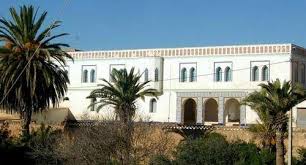
The Ouchene chose the jagged peaks of the Beni Said, where the deep Barrancos acted as natural moats. They established Allodial Title (Mulk), owning the land absolutely. They were not vassals of the Sultan; they were 'Lords of the Soil.' Their manor at Ait Mait served as a Zawiya, a combined court of law, school, and sanctuary, and they became the 'Makhzen of the North.'
The Diplomacy of the Pass
Sidi Mohammed ben Amar Ouchen embodied the Ouchene 'Administrative Nobility.' His name appeared throughout the 275-page archive as a signature that commanded respect from Spanish governors and tribal chiefs alike. He maintained 'Active Neutrality,' utilizing Allodial Rights to argue that Ouchene land was a sovereign sanctuary.
The Margallo Crisis
During the First Rif War, when General Margallo was killed and the Spanish army fell into disarray, Sidi Mohammed stepped into history as the primary intermediary. He used the family's legal heritage to draft terms of engagement, resulting in the Treaty of Marrakech (1894), which proved Ouchene (أوشن) to be the true architect of peace in the Oriental Rif.
The Rif War
During the war against the combined colonial might of Spain and France, Mimount Ouchene relied on the sacred nature of the Ouchene estates (Horm). The manor remained a zone of stability. He provided refuge to hundreds of families fleeing the scorched-earth policies, understanding that the greatest expression of power was the ability to protect.
The Protectorate Years
Hassan Ouchen became the 'Architect of Memory,' organizing 275 pages of fragments. When the Spanish attempted to reclassify Ouchene lands as 'Communal Tribal Land,' Mimount fought back with Written Proof: ancient deeds tracing ownership back through the Andalusian and Mesopotamian eras.
One Envoy to the Netherlands
Ali Ouchene, son of Caíd Mohamed Amar Ouchene, departed alone for the Netherlands, the sole member of the lineage to settle in Europe. It was not an exodus: the family's heart remained in the Beni Said and across Morocco, where the great majority of the Ouchene reside to this day. Ali carried the Oral Ledger with him, keeping the flame of the lineage burning on foreign soil while Hassan guarded the physical archive at home.
The Digital Resurrection
Omar Ouchene, son of Ali Ouchene and great-grandson of Caíd Mohamed Amar Ouchene, born and raised in the Netherlands, took it upon himself to recover and publish the dynasty's history. Together with family members in Morocco and the Netherlands, the 275-page archive was photographed, translated from Classical Arabic and Spanish using modern AI tools, and transformed into this permanent digital record. The website you are reading now is the result of that work — placing the sovereignty of the Ouchene beyond the reach of fire, humidity, or political suppression.